
How Fiction Authors Should Actually Determine Their Book Ad Audience (Part 1)
Whether just getting started with paid ads or already running campaigns that seem to disappear into the void, there is one thing author coach Rebecca Hamilton sees trip up fiction authors at every level: they don't actually know who their book's audience is.
Not because they haven't thought about it. But because most of the advice out there sends them looking in the wrong places.
This is Part 1 of a two-part series on book ad targeting for fiction authors. Rebecca breaks down the foundation here: who your audience actually is, why it's probably not who you think, and the three barriers most authors hit before they ever run a single ad. Part 2 covers why the specific targeting advice most authors have already heard is doing more harm than good.
Why Determining Your Book's Ad Audience Comes Before Everything Else
It doesn't matter whether you're running Facebook ads, Amazon ads, or BookBub promotions. Knowing who you're talking to comes first.
Rebecca Hamilton has built her reputation on advanced Facebook advertising methods for fiction authors, and on the strategies inside the Seven Figure Author Career program that have helped hundreds of authors reach six and seven figures in net profit each year. Even the most sophisticated ad strategy falls apart without this foundation in place.
Targeting is where most authors either win or waste money. The frustration is real: Amazon's AMS advertising offers more targeting control, if you know who to target or can get the ads to actually deliver. Facebook's advertising options feel even more limited, which compounds the problem when you already feel like you have no comparable author audiences to begin with.
Even if you write in a niche genre, or can't think of a single author whose style matches yours exactly, your audience exists. Whether you write sports romance novels that aren't spicy like others in the genre, or LitRPG progression fantasy that challenges genre norms entirely, the readers who want your book are out there. The job is learning how to find them.
That said, knowing your audience is only one piece. Before ads can work, the product behind them has to be solid. Authors who skip straight to targeting without addressing their book's positioning, cover, and series structure tend to hit the same wall. This breakdown of why fiction authors work hard and still don't scale explains exactly why effort without the right foundation rarely produces the results authors are expecting.
The Mindset Shift That Changes Book Ad Targeting for Fiction Authors
Before getting into tactics, there is a mindset shift Rebecca teaches inside the Six Figure Author Coach community that makes everything else fall into place.
Most authors approach ad targeting by looking for their "ideal reader." Someone who reads exactly what they write, loves the same tropes, the same tone, the same heat level, the same pacing. When they can't find that person perfectly represented in a targeting option, they get stuck.
The better question: would someone who enjoys books by this author also enjoy the book being advertised?
That shift alone opens up far more viable audiences and stops authors from chasing a targeting option that doesn't exist on any ad platform.
Think of it less as finding your "ideal" reader and more as getting your book in front of a reader who would enjoy a book like yours. Author doppelgangers are not required. If that's what you've been searching for and it feels impossible, that's because it is.
You can maintain your own unique brand and still appeal to the readers of other authors, even authors who aren't a perfect match. At the same time, targeting too broadly creates its own problem. Targeting Colleen Hoover's readers with an international spy thriller might land eventually, but how many clicks are you paying for before reaching the right ones?
This mindset shift also matters because of how book ads actually work over time. Most authors expect immediate results, but readers frequently see an ad and convert days or even weeks later. The Delayed Buyer Effect is one of the most overlooked dynamics in fiction advertising, and understanding it changes how authors interpret targeting performance entirely.
The Three Barriers Fiction Authors Hit When Identifying Their Ad Audience
Even authors who understand the mindset shift above run into real, practical roadblocks. These are the three Rebecca sees most consistently:
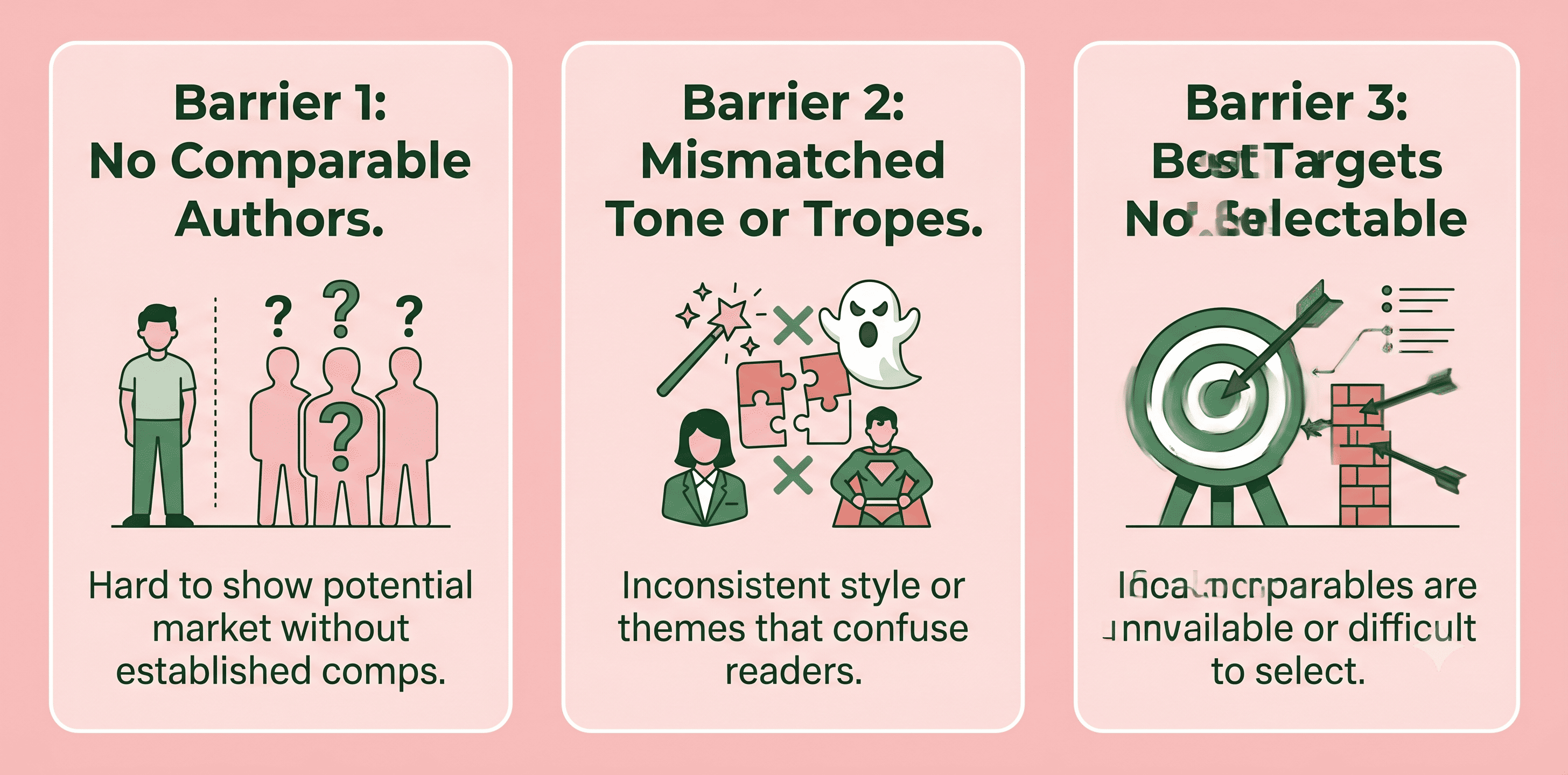
Barrier 1: No Clear Author Comparisons for Niche or Blended Genres
Some authors write genre mashups that don't map neatly onto any single comparable author. If your book blends dark fantasy with slow-burn romance and a found family theme, who exactly do you target?
The answer is not to find one perfect author match. It's to think in terms of reader behavior and what else your target reader is likely to enjoy. This is one of the core audience research methods Rebecca teaches inside the Seven Figure Author Career program. Understanding reader psychology is particularly useful here because it shifts the question from "which author matches me?" to "what emotional experience is my reader looking for?"
Barrier 2: Similar Authors With Different Tone, Tropes, or Content
Other authors in your genre exist, but their books include different tropes, a different heat level, or content that simply isn't in your books. Targeting their readers might bring in clicks from people who are looking for something you don't deliver.
This is where understanding your book's marketability becomes critical before spending anything on ads. Working through the five questions Rebecca recommends every author answer before running ads is a useful starting point. Similarly, market research for fiction authors covers how to identify your true audience before assuming you already know who they are, which is one of the most common and expensive assumptions authors make.
Barrier 3: Your Best Targets Aren't Available on the Platform
The most common frustration. An author who would be a perfect targeting match simply isn't selectable on Facebook. Their audience exists, the readers are there, but the platform hasn't built out their interest data enough to make them a viable option.
This is exactly why Rebecca's approach to Facebook ad targeting goes beyond typing author names into the interests field. The methods covered in Facebook Ad Targeting for Fiction Authors focus on reader behavior signals rather than direct author matches, and include practical alternatives for finding viable audiences even when the most obvious targets aren't selectable. It's also worth understanding how often Facebook ads need to be refreshed once targeting is in place, because even well-built audiences have natural lifecycles that affect performance over time.
Three Things Every Fiction Author Needs to Understand About Their Ad Audience
Once the barriers are clear, these three principles should shape every targeting decision going forward.
Your Target Audience Probably Isn't Who You Think It Is
Authors assume their readers look a certain way, read certain things, and come from certain places, and then the data tells a completely different story. Market research is not optional for this reason. If you haven't done a deep dive into who is actually buying your books, this guide to market research for fiction authors walks through how to approach it properly. And if your results have felt inconsistent despite doing everything right, the author blind spot post addresses exactly why most authors are asking the wrong questions about their own audience.
Your Target Audience Is Also Part of Many Other Audiences
Your readers don't only read your books. They read across genres, tropes, and authors. Many other targeting pools also contain your readers. The job is identifying which ones are worth paying to reach and which ones will eat your budget without converting. This is also why understanding what popular books actually have in common matters: the books that attract millions of readers are telling you something about shared reader behavior that has direct targeting implications.
Your Targeting Approach Needs to Be Different for Every Platform
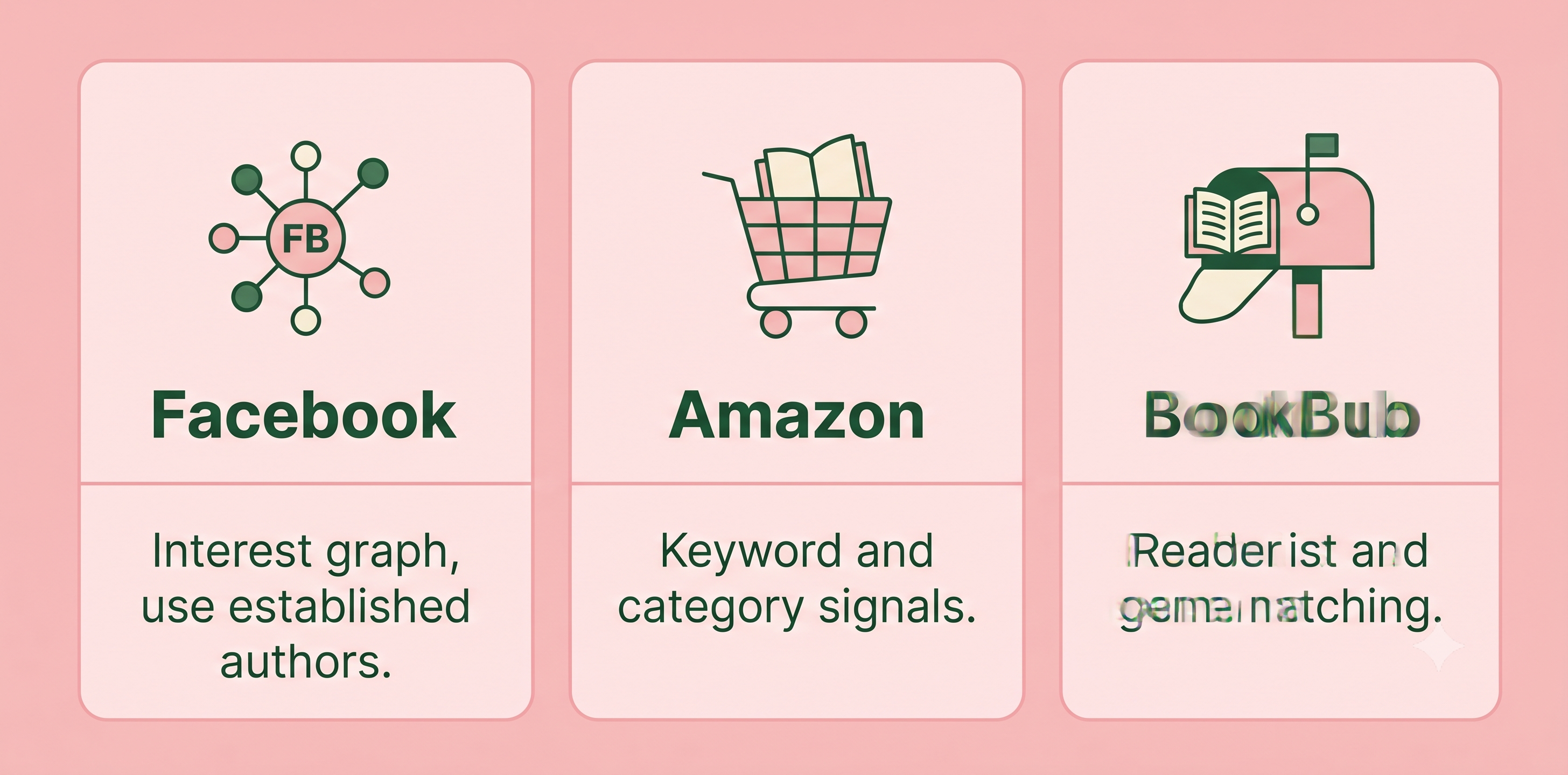
Targeting on Facebook, Amazon, and BookBub is not created equal. What works on one platform won't translate to another. Authors who build one targeting list and apply it everywhere are leaving both money and data on the table. This also applies to how you respond when platforms update their algorithms. How authors can adapt to algorithm changes without losing royalties covers why the authors who stay stable through platform shifts are the ones with systems built around data rather than tactics.
What Comes Next
Part 2 of this series covers the specific targeting advice circulating in the author community and why most of it is either outdated, incomplete, or actively working against you, including why the widely recommended "use your also-boughts" strategy is one Rebecca personally avoids and why.
Want to Go Deeper?
Rebecca Hamilton is a New York Times, USA Today, and Wall Street Journal bestselling author and coach who has helped hundreds of fiction authors build ad strategies that actually scale. Join the free Six Figure Fiction Facebook group where Rebecca shares live trainings, case studies, and practical advice for building a six or seven figure author career.
